Navigating Finances in a Muslim Marriage

Managing money in a marriage is about more than just numbers—it’s about aligning your values, fulfilling your spiritual obligations, and building a secure future together. In many Muslim households, these conversations are guided by Shariah principles that emphasize equity, protection, and mutual support.
Whether you are newlyweds or looking to refine your financial partnership, here is a simplified guide to managing money in a Muslim marriage.
Financial Roles: The Foundation of Support
In Islam, financial responsibilities are clearly defined to ensure every family member is cared for. However, these "rules" serve as a floor, not a ceiling, for how couples can support one another.
The Husband’s Responsibilities
The husband is traditionally the financial anchor of the family. His duties include:
Provision (Nafaqah): Providing for essential needs: food, clothing, housing, and healthcare.
The Nikah Contract: Honoring the Mahr (dowry) and any specific financial conditions agreed upon in the marriage contract.
The "Middle Path": Spending according to his means—avoiding both stinginess and extravagance.
The Wife’s Financial Autonomy
A unique aspect of Islamic finance is the wife's total right to her own wealth.
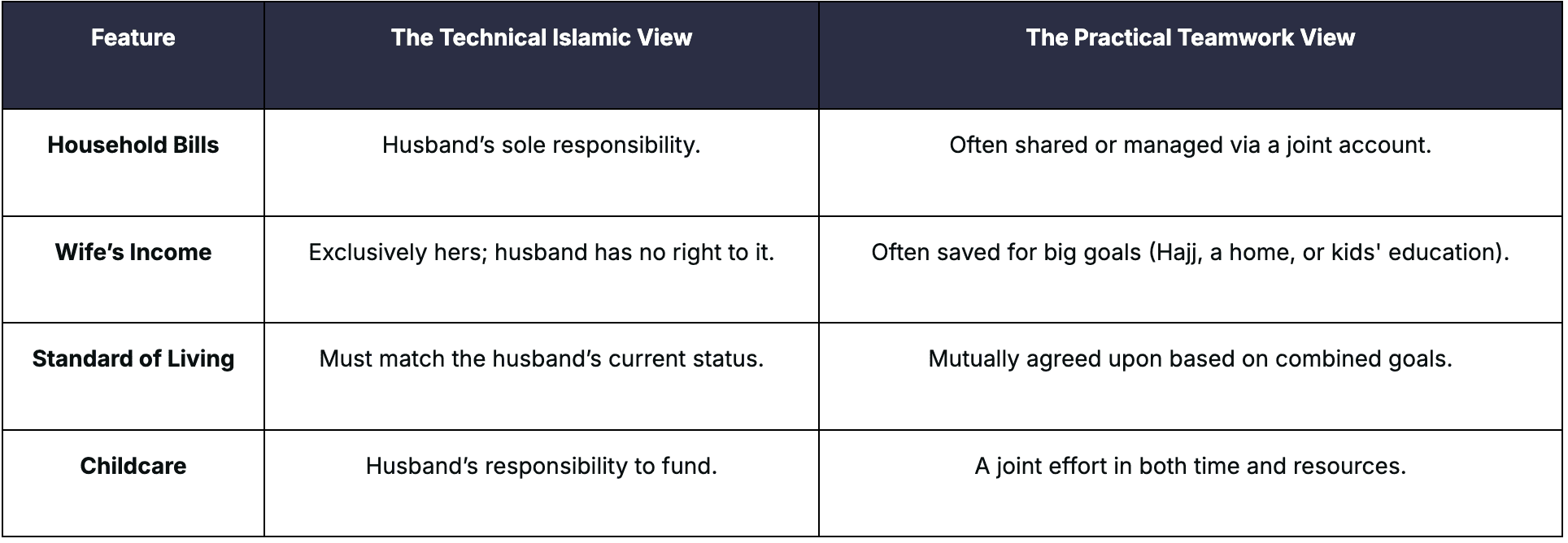
Full Ownership: Any money a wife earns or inherits is hers alone.
No Obligation to Spend: Technically, she is not required to spend a penny on household expenses, even if she is wealthier than her husband.
Voluntary Contribution: Many modern couples choose a "team" approach where the wife contributes voluntarily to enhance the family's lifestyle, which is considered an act of Sadaqah (charity) and kindness.
Comparing Financial Perspectives
To make these roles easier to visualize, here is a breakdown of how responsibilities typically shift between the "Technical/Legal" view and the "Practical/Marital" view.
Practical Steps for Success
Navigating these roles requires clear communication. Here are four practical areas every couple should discuss:
A. Choosing an Account Structure
There is no "one size fits all" here. You must decide what fits your dynamic:
Shared Accounts: Great for transparency and paying household bills (rent, groceries).
Separate Accounts: Maintains the wife's financial autonomy and allows the husband to manage his personal spending.
The Hybrid Model: A joint account for "The House" and separate personal accounts for "Him" and "Her."
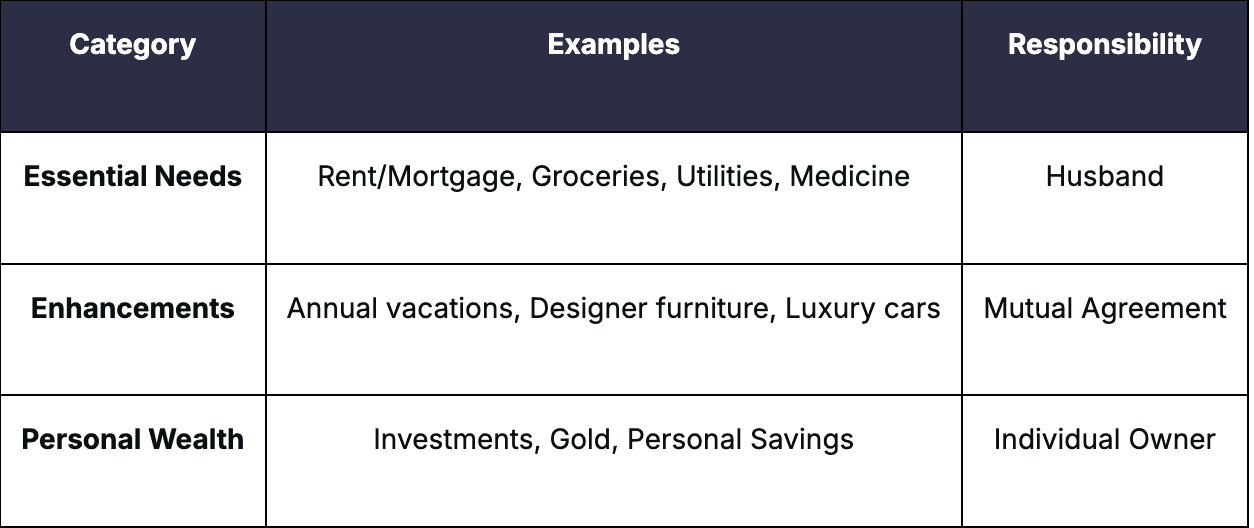
B. Defining "Needs" vs. "Wants"
The Quran encourages moderation. Use the table below to help categorize your spending:
C. Securing Your Legacy
Planning for the "unseen" is a vital part of Islamic financial duty. Without a Will, provincial or regional laws take over, which often contradict Islamic inheritance rules.
Why it matters: It ensures your spouse is cared for and your assets are distributed according to Shariah.
The Solution: You don’t need a manual process. Manzil offers Islamic-compliant Wills that are legally valid and ethically sound, providing peace of mind for both partners.
Conclusion: The "Garment" Philosophy
The Quran describes spouses as "garments for one another." Just as clothes protect us and hide our flaws, your financial arrangement should protect your spouse and cover the family's needs. While the husband holds the primary duty, a successful marriage thrives on empathy, flexibility, and transparency.